


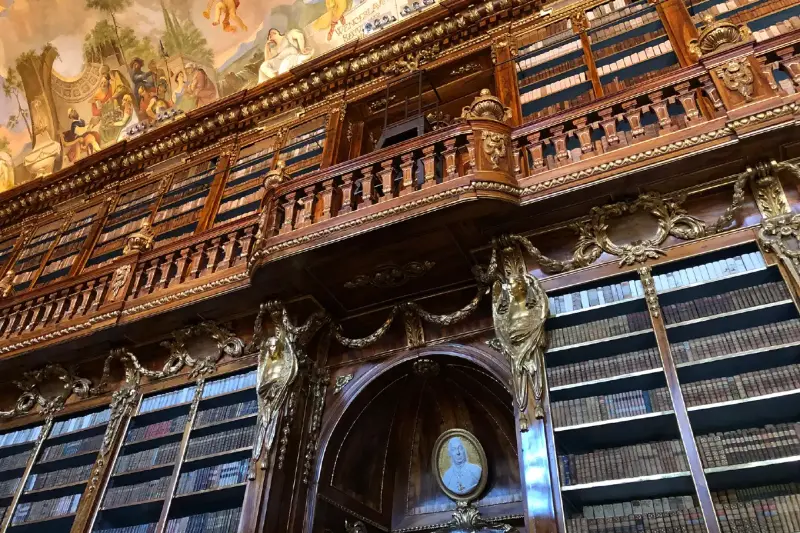
Nestled deep within the walls of Vatican City, the Vatican Apostolic Library—often simply called the Vatican Library—is more than a storehouse of ancient manuscripts and rare volumes. It is a living archive of history, religion, art, and science, boasting treasures that span over six centuries. The mere mention of its name conjures images of gilded ceilings and mysterious tomes, but the reality is even more fascinating.
Whispers from the Origins: The Birth of a Library
Founded officially by Pope Nicholas V in 1451, the Vatican Library began as a modest collection of a few hundred manuscripts. Yet, thanks to ambitious popes and the intellectual fervour of the Renaissance, it quickly expanded. Today, the Library houses over 1.1 million printed books, nearly 75,000 codices, and an astonishing range of documents in dozens of languages.
Imagine standing in rooms where Michelangelo and Galileo once sought inspiration—rooms that witnessed the ebb and flow of European civilisation. The walls themselves seem to hum with secrets.
Guardians of the Unseen: Collections Not Meant for All Eyes
Part of the Library’s allure lies in its aura of inaccessibility. Despite the richness of its catalogues, only selected scholars gain physical access. The work here, handled by expert conservators, includes not just Christian texts but also works from ancient Egypt, China, and the Middle East.
Some of the gems within these walls include:
- The Codex Vaticanus, the oldest surviving manuscript of the Greek Bible, dating to the 4th century.
- Leonardo da Vinci’s original sketches and notes, locked away in precise climate-controlled cases.
- The Urbino Bible, a lavishly illustrated medieval masterpiece.
- Mysterious forbidden texts—such as early treatises on alchemy and magic—that raised eyebrows in their own eras.
The Library’s digital preservation programme is working tirelessly, scanning thousands of manuscripts to make them available to the world—slowly chipping away at centuries-old secrecy.
Unlocking the Mystery: How Does One Enter?
Access to the Vatican Library is a closely guarded privilege. To even set foot in the reading rooms, scholars must present letters of recommendation and demonstrate a legitimate research purpose. Security checks are rigorous. Once inside, visitors find not only ancient texts, but murals, renaissance globes, and floors of swirling cosmatesque mosaics.
One can’t help but feel a thrilling sense of discovery—a whispered invitation to glimpse knowledge once hidden from the masses.
Not Just Bibles and Saints: Renaissance Science and Forgotten Stories
While faith and theology dominate perceptions of the Vatican Library, science, philosophy, and worldly wisdom fill its shelves. Here, you can find:
- Ancient works on astronomy, reflecting a time when church and science often intertwined.
- Arabic mathematical treatises, testament to early global intellectual exchange.
- Galileo’s censored letters, caught in the crossfire of faith and empirical inquiry.
- Early maps and atlases, charting the New World’s discovery.
These treasures speak not only of papal power but also of wider cultural exchanges—proof of the Library’s global significance.
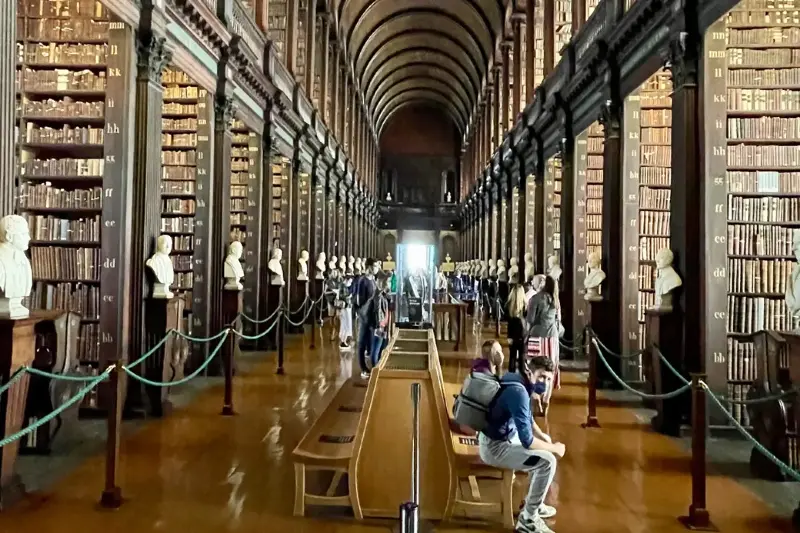
Modern Marvels: From Secret Vaults to Digital Doors
In the last decade, the Vatican Library has embarked on a mission to bring its hidden wonders closer to the public. Digitisation projects—sometimes using advanced multispectral imaging—have revealed lost texts and erased annotations. This virtual outreach stands in stark contrast to the Library’s once impenetrable reputation.
For the first time, ordinary people can delve into manuscripts once reserved for the elite—each scan a doorway to a vanished world.
The Vatican Library remains an enduring enigma: a place where the sacred and the scholarly unite, and where every corridor may reveal a new secret. As technology cracks open its archives, one can only wonder—what further mysteries lie in wait, waiting to engage the next curious mind who dares to seek them?